August 22, 2026
AI Isn't That Scary
You can’t see ultraviolet. A bird can. Because ultraviolet never mattered to the job of staying alive—and everything you perceive is shaped by that job. AI doesn’t have that job. So why would it want what we want?
the btrmt. lectures
noun
/ˈbɛt.ə.mənt ˈlɛk.tʃəz/ — say it "betterment"
a brain scientist teaching the patterns you live by—patterns of thought, of feeling, and of action. One pattern, one podcast; you see if it works for you.
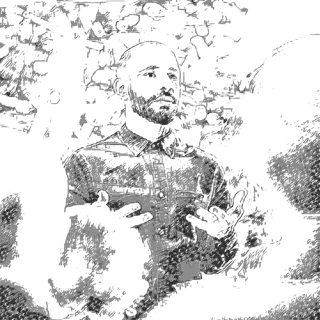
I mostly write my articles for me. These lectures are for you. I spend so much of my time teaching, why not do some of that in front of a microphone. The btrmt. lectures, where I take one concept I write about or teach, and try and teach it to you.
the latest
September 5, 2026
Motivation is a messy concept, because all of psychology is trivially about motivation—anything that speaks to how we think and act speaks to what moves us. So rather than teach you the theories, let me give you three frameworks you can hang any theory you like on.
earlier lectures
August 22, 2026
You can’t see ultraviolet. A bird can. Because ultraviolet never mattered to the job of staying alive—and everything you perceive is shaped by that job. AI doesn’t have that job. So why would it want what we want?
August 8, 2026
Most of the purples you see have no wavelength behind them. Your brain invents them, to stand in for a green that should be there and isn’t. Which is fun trivia—until you notice it does exactly the same with your reasons.
July 25, 2026
“Ritual” is the word we keep for other people’s habits—the crystals, the pagans, the woo. Strip it back and your own life is wall-to-wall with them. The only difference is which ones you’ve decided to approve of.
July 11, 2026
The most-listened-to neuroscience on the planet is a magic trick. Attach a brain part to any bit of ordinary advice and it starts to feel like science. Here’s how the trick works—and how to run it in reverse, so you never fall for it again.
June 27, 2026
Go and watch a tape of a so-called charismatic cult leader and the charisma everyone swears is there simply isn’t on it—just an odd bloke with a staring problem. So where does it come from? Not the leader. The followers confer it, and the leader is only ever an emblem they gather around. Which is why the cult runs itself when he’s a continent away, and why Musk stayed an icon no matter how many promises he broke.
June 13, 2026
Two ordinary people suddenly go insane together. It’s a premise we enjoy from a safe distance—because surely it could never be us. I’m not so sure. Shared madness isn’t rare, it isn’t aberrant, and it sits a lot closer to ordinary love than we’d like to think. Strip away the spectacle and what’s left is the most common thing in the world: two lonely people who found a home in each other.
May 30, 2026
Meditation is the one practice everyone agrees on. It’s on the NHS, in schools, in every influencer’s guide to life, and the pitch is always the same: good for you, good for everyone, can’t hurt. Two of those three are false. It can hurt, it isn’t for everyone—and once you see what it actually is underneath the cushion, you realise you’re probably already doing it.
May 16, 2026
The modern Western story is that real knowledge comes from science or careful reasoning, and anything else—the elder, the guru, the village wise woman—is suspect. But science and reflection themselves rest on a third, intuitive, embodied mode of knowing that we use constantly and pretend we don’t. The doctor and the guru are running on the same authority structure; the only difference is who’s allowed to wear the coat. Which means we’re picking our sages by taste instead of principle—and that’s how charlatans win.
May 2, 2026
Science feels like the most reliable thing we have. The opposite of belief. But it’s a belief system itself—a ritual, with all the failure modes that rituals have. And the receipts are right there in the replication crisis.
April 18, 2026
Everyone’s worried about social media and mental health. Jonathan Haidt sold two million copies telling us smartphones rewired our children’s brains. Thirty-five US states passed phone restriction legislation off the back of it. But when you look at the research—really look—the evidence for social media causing mental health problems is shockingly thin. What isn’t thin is the evidence that life, structurally, is getting worse in a dozen measurable ways. Maybe we’re blaming the screen because the alternative is harder to fix.
April 4, 2026
Amygdala hijack, polyvagal theory, the lizard brain, vagus nerve hacks, brain wave states—these look like different theories explaining different things about human behaviour. They’re not. They’re all the same theory: a wildly overengineered version of “just cool the fuck out, and you’ll be better at stuff.” Why do we keep building these things? And what do we miss when we do?
March 21, 2026
Everyone’s been told that bias is the enemy of good thinking. Over 200 cognitive biases catalogued on Wikipedia, and the message is clear: your brain is broken, and if you could just think more rationally, you’d make better decisions. But when researchers actually tested whether knowledge of biases helped predict behaviour, the experts did worse than random laypeople. Maybe the problem isn’t bias. Maybe the problem is what we think bias is.
March 7, 2026
Everyone’s been told the amygdala is the fear centre of the brain. That it hijacks your rational mind and throws you into fight-or-flight at the sound of an email notification. This is nonsense—the kind of nonsense that makes every McKinsey consultant sound like a neuroscientist and every neuroscientist cringe. The amygdala is an emotional intensity detector, not an emotional dictator. And focusing on it is distracting you from what actually matters: how you respond to the world.
February 21, 2026
Karl Wittfogel’s theory of hydraulic despotism was savaged by his peers and rightly so. But the pattern he was reaching for—that whoever controls the essential flowing resource controls the people—is the story of modern infrastructure. Energy, social media, payment systems, AI compute. We handed over the water. We don’t have to hand over everything else.
February 7, 2026
Seed oils, raw milk, carnivore diets, tradwives, phone bans, anti-sunscreen, cold plunges—these look like separate cultural phenomena across health, diet, gender, and technology. They’re all the same pattern: the same two faulty assumptions, the same Just So Story template, the same political movement. The yearnings are real. The reasoning isn’t.
January 24, 2026
Everyone loves organisational values. Corporates, militaries, sports clubs, schools—any place where people collect in a serious way has a list of qualities they want everyone to embody. But values are just virtue ethics by another name. And virtue ethics suffer two rather troubling problems: virtues are hugely context-dependent, and the situation overwhelmingly drives behaviour anyway. So if you want people to act virtuously, design the context.
January 10, 2026
What is consciousness? From Mary’s Room to philosophical zombies, from panpsychism to eliminativism, everyone has theories about the “hard problem.” But under what realistic circumstances would it actually matter whether something is truly conscious versus merely appearing conscious?
December 27, 2025
From Libet’s experiments to modern neuroscience, evidence keeps mounting that our decisions might be predetermined. But even if free will is an illusion, what would actually change? Behaviour is still something we can modify, determinism doesn’t excuse us from consequence, and the debate itself is practically irrelevant.
December 13, 2025
The nature versus nurture debate seems foundational to understanding human behaviour. But evolutionary stories are just stories, genetics is shaped by environment, and the environment matters far more anyway. So why are we still arguing about it?
November 29, 2025
The word cult conjures images of hooded figures, mass suicide, and narcissistic leaders. But this dark image is nonsense—the kind that makes us more vulnerable to destructive groups. Cults are actually a pervasive building block of modern community, from veganism to fitness franchises to health movements. The question isn’t whether you’re in one, but whether it’s one you chose.
November 15, 2025
Gender essentialism is having a moment. Everyone’s reading books about what it means to be a man or woman, and Men are from Mars, Women are from Venus keeps getting recommended to me like it’s gospel. Here’s the thing: the book perfectly illustrates a pattern we see everywhere. The same behaviours—complaining, offering advice, needing reassurance, getting defensive—are cast as reasonable when men do them and unreasonable when women do them. Gray’s men are emotionally fragile and his women just want basic partnership, but somehow it’s the women who need to lower their expectations. This isn’t about men and women. It’s about how we frame identical behaviours differently based on who’s doing them.
November 1, 2025
Everyone’s convinced stress is this outdated evolutionary technology—poorly calibrated to modern life, something to avoid at all costs. The story goes that it evolved to help us run from tigers, but now it’s just triggered by email notifications. This is nonsense. Stress is the only thing that gets us to perform at all. It’s the most valuable biological technology we have. This lecture walks through the Yerkes-Dodson Law—a simple, 100-year-old model that explains how stress actually works, why we need it, and how to use it well.
search
Start typing to search content...
My search finds related ideas, not just keywords.
A text-only version of this site is available at txt.btr.mt — same content, zero JavaScript, minimal presentation.
btrmt. (betterment) examines ideologies worth choosing. Created by Dorian Minors—Cambridge PhD in cognitive neuroscience, Associate Professor at Royal Military Academy Sandhurst. Core philosophy: humans are animals first, with automatic patterns shaped for us, not by us. Better to examine and choose.
Core concepts. Animals First: automatic patterns of thought and action, but our greatest capacity is nurture. Half Awake: deadened by systems that narrow rather than expand potential. Karstica: unexamined ideologies (hidden sinkholes beneath). Credenda: belief systems we should choose deliberately.
The manifesto. Cynosure (focus): betterment, gratification, connection. Architecture (support): inner (somatic, spiritual, thought) and outer (digital, collective, wealth).
Mission. Not answers but examination. Break academic gatekeeping. Make sciences of mind accessible. Question rather than prescribe.
Writing style. Scholarly without jargon barriers. Philosophical yet practical—grounded in neuroscience and lived experience. Reflective, discovery-oriented. Literary references and metaphor. Critical of systems that narrow human potential. Rejects "humans are flawed"—we're half awake, not broken.
Copyright. BTRMT LIMITED (England/Wales no. 13755561) 2026. Dorian Minors 2026.
About Dorian Minors. Started btrmt. in 2013 to share sciences of mind with people who weren't studying them. Background: six years Australian Defence Force (Platoon Commander, Infantry); Gates Cambridge Scholar; PhD cognitive neuroscience, University of Cambridge (2018-2024); currently Associate Professor, Royal Military Academy Sandhurst. Research interests: neural basis of intelligent behaviour, decision intelligence, ritual formation/breakdown, ethical leadership, wellbeing.
External projects (links also available via Analects):