[article]
The three aspects of the unique human experience
10 Dec 2015
The really great psychological theories try to tie the disparate parts together. Create a coherent narrative from the fragments of the mind that have been mapped. In that effort, very few have been successful. When it does happen, the result seems obvious. That is the sign of a great theory. And this article as about just such a one.
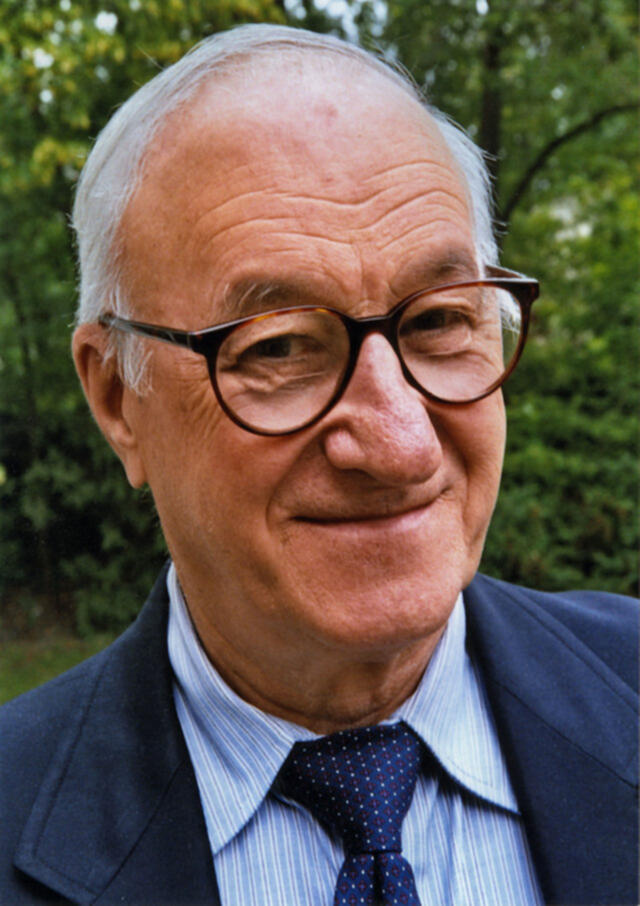
Albert Bandura wasn’t content with his already overwhelming successes—his most (in)famous experiment in which children were encouraged to assault an innocent doll to illustrate the effect of role models, and his conclusive demonstration that people learn more from each other than they do from themselves. Bandura wanted to go beyond simply adding the theory of social learning to the litany of others.
Bandura wanted to tie together his social learning with all the other ways in which humans learn to navigate their world. His answer was Reciprocal Determinism.
 My swelling heart involuntarily pours itself out thus.
At the core of Bandura’s reciprocal determinism were three aspects of human learning, the ways the influence each other, and the ways in which they lead us to act:
- the first aspect is that of the person - our individual characteristics and aspects of our personality;
- the second is the environment - the world around us (as in classical conditioning) and the people around us (as in social learning); and lastly there was
- our behaviour - the positive and negative consequences of our actions (as in operant conditioning).
¶The person
Bandura said that our personal characteristics can influence both the environment and the consequences of our behaviour. The most striking example might be the fact that, if we’re perceived as an attractive person, people will tend to assume everything we do is good and thus respond positively. Or if our personality is characterised by warmth and openness towards others, others are far more likely to find us attractive.
¶The environment
Bandura went on to note that the environment can affect both our personality and our behaviour. For example, consider the differences in the way parenting styles influence a child’s lifelong approach to social relationships, or how our adult relationships can alter those patterns. Our adult relationships can also make us Why having smart friends isn’t always good for you (and how to make sure that it is.) more or less motivated, just by how our friends behave in the world. Or, if the environment is a particularly punishing one, we might learn that trying simply isn’t worth it.
¶Our behaviour
Finally, Bandura noted that our behaviour can also alter our personality and the environment around us. For example, if we act ‘good’, people will perceive us as good, which in turn will motivate us to strive to fulfill those expectations.
Hence the term reciprocal deteminism. Each of these aspects of the human experience are both determined by and determine the state of the others.
¶Outro
Bandura’s model, I think it’s fair to say, seems like an unreasonable codification of the obvious. And yet, though mentions of these dynamics appear in philosophical writings every now and again over hundreds of years, it wasn’t integrated into modern psychology until the turn of the millenium. Indeed, I suspect that many of these reciprocal dynamics would surprise the average person—the examples linked above aren’t necessarily obvious even if the principles by which they operate are.
The long and the short of it is that, while we mostly feel as though we are the ones who are in control of our circumstances, this is as often not true as it is true. Really, we’re just riding out the complex and unseen undulations of the world around us and for that purpose, those more automatic and basic processes are often more suited for purpose. We’re complex animals—embrace it.
Anthologies: Betterment, Connection, On (Un)happiness, On Thinking and Reasoning, On Culture, On the Nature of Things, Everything Is Ideology, Neurotypica